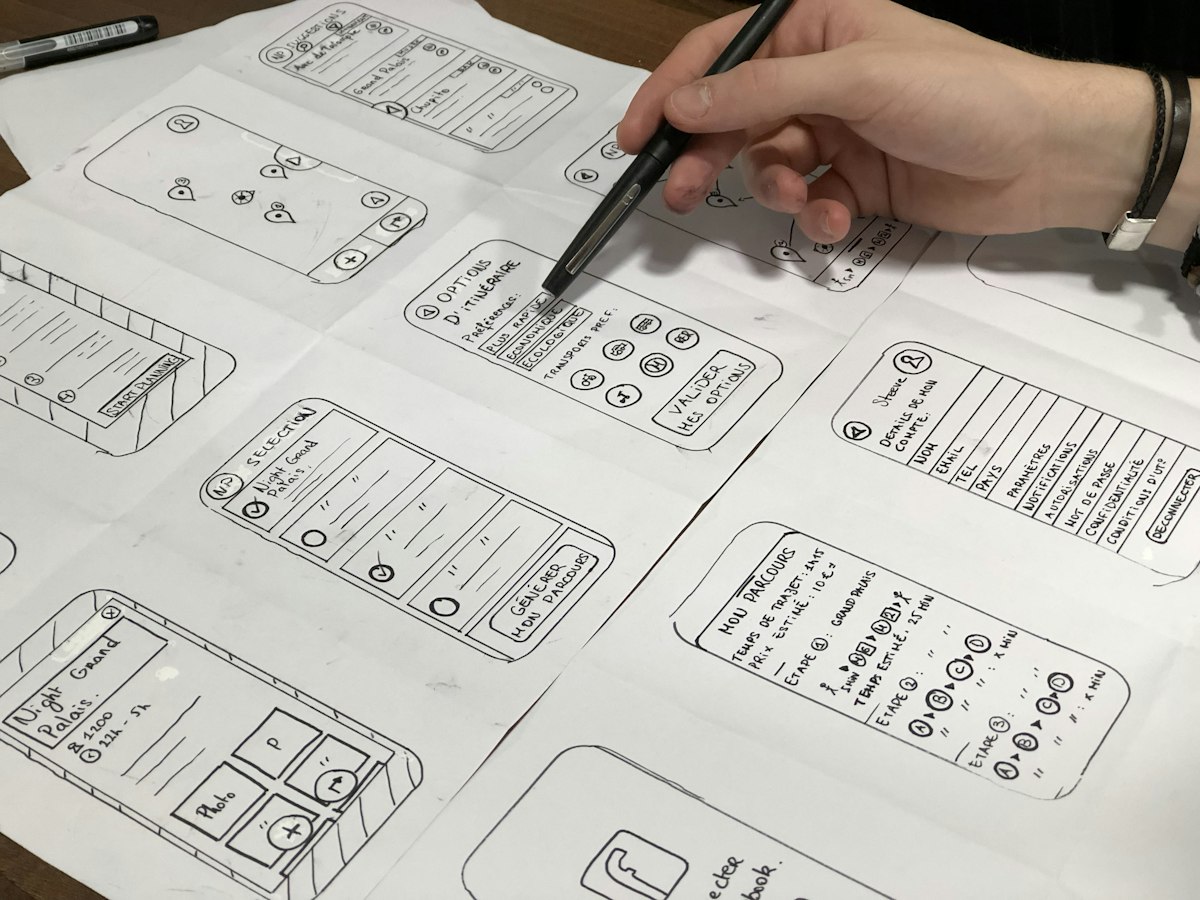
Wireframing is the blueprint stage of website design — a simple, structural layout of each page, stripped of colors, images, and styling, that maps out where everything goes and how the page guides a visitor toward action. It's the unglamorous but crucial step that separates websites that convert from those that merely look nice, because it forces the fundamental decisions about structure, hierarchy, and flow before anyone gets distracted by visuals. Skipping wireframing is like decorating a house before deciding the floor plan. This guide explains what wireframing is, why it comes before visual design, how the process works, and — most importantly — how thoughtful wireframing builds conversion into a website from the ground up rather than bolting it on afterward.
What Wireframing Is (and Isn't)
A wireframe is a basic, low-fidelity visual representation of a web page's structure and layout — think of it as the skeleton or blueprint. It shows what elements go on the page (headline, navigation, buttons, content blocks, images placeholders), where they're positioned, and how they're prioritized, using simple boxes, lines, and placeholder text rather than real design.
Crucially, wireframes deliberately exclude visual design: no colors, no fonts, no imagery, no branding. This is intentional — by stripping away aesthetics, wireframing forces focus on the fundamentals that determine whether a page works: structure, content hierarchy, layout, and flow. It answers 'what goes here and why' before 'what does it look like'.
Wireframing isn't the final design, and it isn't meant to be pretty — that's a common misunderstanding. It's a thinking and planning tool. A wireframe that looks unfinished is doing its job; its value is in the structural decisions it makes explicit and easy to change before expensive visual design and development begin.
- A wireframe is a low-fidelity blueprint of a page's structure and layout
- It shows what elements go where and how they're prioritised — using simple boxes
- Wireframes deliberately exclude colors, fonts, and imagery to focus on fundamentals
- It's a planning tool, not the final design — looking unfinished is by design
Why Wireframe Before Visual Design?
Wireframing comes before visual design for a simple reason: it's far cheaper and faster to get the structure right on a blueprint than to discover structural problems after a page has been fully designed and built. Wireframing front-loads the most important decisions to the cheapest stage.
When you jump straight to visual design, two things go wrong. First, everyone — clients and designers alike — gets distracted by colors and aesthetics and neglects whether the page actually works structurally. Second, structural changes become expensive: reworking a fully designed and coded page is far costlier than moving boxes on a wireframe. Wireframing lets you iterate on structure quickly and cheaply until it's right.
Wireframing also improves collaboration and feedback. Because wireframes focus on structure, they generate feedback about what matters (Is the value proposition clear? Is the primary action obvious? Does the flow make sense?) rather than premature debates about button colors. This gets the fundamentals agreed before visual design, so designers build beauty on a proven structure rather than styling a flawed one. The result is a smoother process and a better outcome.
Get Structure Right When It's Cheap to Change
Moving boxes on a wireframe costs minutes; restructuring a fully designed and coded page costs days. Wireframing front-loads the most important decisions — structure, hierarchy, flow — to the cheapest stage, so you never discover a fundamental problem after expensive design and development.
- It's far cheaper to fix structure on a blueprint than after design and build
- Jumping to visuals distracts from whether the page actually works
- Wireframes generate feedback on fundamentals, not premature color debates
- Getting structure agreed first means designers style a proven layout
The Wireframing Process, Step by Step
Effective wireframing follows a logical process that translates business goals and user needs into page structure. Here's how thoughtful wireframing typically works.
It starts before the wireframe itself, with clarity on goals and users: what is each page's purpose, what action should visitors take, and what do users need to see to take it? This grounds structure in strategy. Then comes information architecture — organizing content and mapping the pages and how they connect. Only then do you wireframe individual pages, deciding what elements each needs and arranging them by priority and flow.
Wireframes usually progress in fidelity: low-fidelity sketches (rough boxes to explore structure quickly), then more refined wireframes (clearer layout, placeholder content, defined hierarchy). Throughout, you review and iterate — testing whether the structure serves the goals and users, and adjusting. Once the structure is agreed, wireframes hand off to visual (UI) design, which adds the styling on top of the proven skeleton. This sequence — goals, IA, wireframe, iterate, then design — is how structure and strategy get built in from the start.
Execution Flow & Tactical Architecture
Clarify Goals & Users
Define each page's purpose, the target action, and what users need to take it.
Information Architecture
Organise content and map the pages and how they connect.
Wireframe & Prioritise
Lay out each page's elements by priority and flow, from low to higher fidelity.
Review, Iterate, Hand Off
Test structure against goals, refine, then hand the proven skeleton to visual design.
- Start with goals and users — ground structure in strategy
- Map information architecture before wireframing individual pages
- Progress from low-fidelity sketches to refined wireframes, iterating throughout
- Hand the agreed structure to visual design to style on a proven skeleton
How Wireframing Builds Conversion Into a Site
The reason wireframing matters so much for conversion is that conversion is fundamentally a structural property — it's about guiding a visitor's attention and actions toward a goal, which is decided at the wireframe stage, not the styling stage. Good wireframing builds conversion into a site's bones.
Conversion-focused wireframing makes deliberate decisions: what's the single most important thing on this page and is it given visual priority in the layout? Is the primary call to action prominent and logically placed? Does the page structure follow the user's decision journey (hook, value, proof, action)? Are trust signals and objection-handlers positioned where doubts arise? These are structural choices, and getting them right in the wireframe means the page is built to convert before a single color is chosen.
By contrast, sites designed without conversion-focused wireframing often look great but convert poorly — because the beautiful visuals sit on a structure that doesn't guide the visitor. Wireframing is where you ensure the value proposition leads, the CTA is unmissable, the flow makes sense, and every element earns its place in service of the goal. That's why thoughtful wireframing is the foundation of websites that convert, not just websites that look nice.
- Conversion is structural — it's decided at the wireframe stage, not styling
- Wireframing sets visual priority for the most important element and the CTA
- Structure the page to the decision journey: hook, value, proof, action
- Position trust signals and objection-handlers where doubts arise
Common Wireframing Mistakes to Avoid
Wireframing done poorly loses its benefits. Avoiding these common mistakes ensures wireframing delivers the structural clarity it's meant to.
The biggest mistakes: adding visual design too early (colors, real images, styling) which defeats the purpose of focusing on structure; making wireframes too detailed or 'pretty' so people react to aesthetics instead of structure; and skipping the goals-and-users grounding, producing wireframes that arrange elements without strategic purpose. Another common error is wireframing in isolation without stakeholder feedback, so structural problems surface only later.
Also avoid cramming everything onto the page (wireframing should force prioritization — deciding what matters most and what to cut), and treating wireframes as final rather than iterating. The discipline of wireframing is precisely to make hard structural and prioritization decisions deliberately, at the cheap stage. Done right — low-fidelity, goal-grounded, iterated with feedback, and focused on structure and conversion — wireframing is the step that makes everything downstream better.
- Don't add colors, images, or styling too early — it defeats the purpose
- Don't make wireframes too pretty; people should react to structure, not aesthetics
- Don't skip grounding in goals and users, or wireframe in isolation without feedback
- Use wireframing to force prioritisation — decide what matters and what to cut
Design Websites That Convert with Spiralreach
At Spiralreach (Spiral Reach), wireframing is a core part of how we design websites that convert, not just look nice. We ground every project in goals and users, map the structure, and wireframe conversion into the site's bones — deciding hierarchy, flow, and calls to action before adding beautiful visual design on a proven skeleton.
If your website looks good but doesn't convert, the problem is usually structural — a foundation that visual design can't fix. We'll rebuild it from the wireframe up, so conversion is built in from the ground floor.
Explore our UI/UX Design & Experience Engineering, our Website Design & Development, and our CRO capabilities.
If you're ready to turn this into measurable growth, book a free, no-obligation strategy consultation with our specialists today at Spiralreach Contact.
- Goal- and user-grounded wireframing that builds conversion into the structure
- Information architecture and flows mapped before visual design
- Conversion-focused layouts with clear hierarchy and prominent CTAs
- Beautiful visual design built on a proven, tested structure
Frequently Asked Questions
What is wireframing in web design?
Why wireframe before designing visuals?
Do wireframes need to look polished?
How does wireframing improve conversion?
What's the wireframing process?
Key Takeaways
- A wireframe is a low-fidelity blueprint of a page's structure, without colors or styling.
- Wireframing comes first because fixing structure on a blueprint is far cheaper than after build.
- Excluding visuals forces focus on structure, hierarchy, flow, and conversion fundamentals.
- The process: clarify goals and users, map IA, wireframe and prioritise, iterate, then design.
- Conversion is structural — wireframing builds it into a site's bones before styling.
- Set visual priority for the key message and CTA, and structure to the decision journey.
- Avoid adding visuals too early, making wireframes too pretty, or skipping goal grounding.